
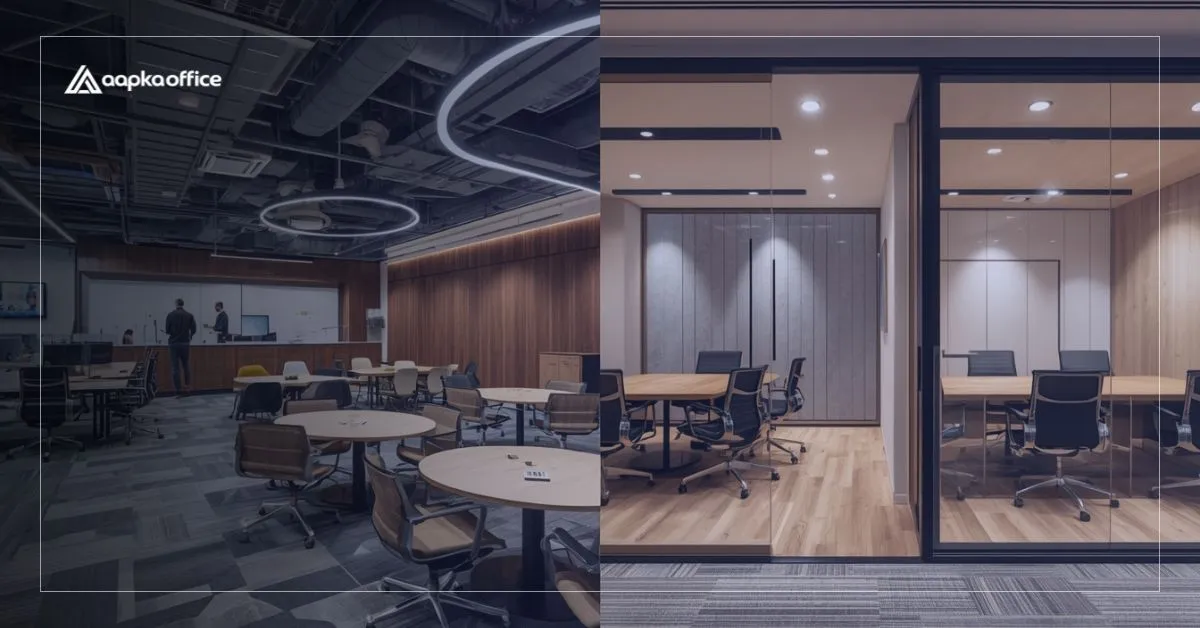
Grade A commercial office space in Gurugram was once defined by a relatively simple set of criteria: a multi-tenanted building above a minimum floor area, modern construction, central HVAC, DG backup, a professional lobby, and institutional ownership. A building that met these criteria could market itself as Grade A and command the premium rents that the designation implied.
That definition is no longer adequate.
The two dominant tenant segments in Gurugram’s commercial market — technology companies and GCCs on one side, financial services and BFSI operations on the other — have developed distinct and increasingly demanding sets of expectations for what a Grade A building must deliver. These expectations go beyond the structural definition of Grade A and reach into workspace design philosophy, building intelligence and IoT infrastructure, physical security and data governance standards, wellness features and environmental quality, and the specific operational capabilities that each sector requires to function effectively.
What makes this evolution commercially significant is that the gap between the buildings that meet these evolved expectations and those that merely meet the traditional Grade A criteria is widening — and the rent divergence between them reflects this. Buildings that deliver what technology GCCs and financial services firms actually require in 2026 command premiums of 15 to 25% over buildings that are nominally Grade A but have not invested in the infrastructure and design features that these tenants now treat as baseline requirements.
This guide maps what each sector specifically expects from premium office stock in Gurugram in 2026 — where the two sectors converge, where they diverge significantly, and what tenants from each sector should evaluate before committing to a premium rent.
1. The Baseline That Is No Longer Differentiating
Before examining what each sector specifically demands, it is useful to establish what Grade A features have become so standard that they no longer differentiate one building from another — the baseline that every building claiming Grade A must provide, but that no longer commands a premium.
The commoditised Grade A features (table stakes as of 2026):
- Centralised HVAC with independent zone control per floor
- Full DG backup for tenant floors and common areas
- High-speed passenger lifts (service and passenger separate)
- 24/7 manned security with CCTV
- Covered and surface car parking (minimum 1 bay per 1,000 sq ft)
- Fire suppression — wet pipe sprinkler throughout
- Clean and professionally maintained common areas
- Single-point building management contact for tenant operations
- Basic structured cabling (Cat 6) to floor distribution points
- At least one ISP connection with broadband access
A Gurugram office building that does not have every item on this list is not Grade A — regardless of its marketing. A building that has every item on this list is Grade A by the traditional definition — but is not differentiated from dozens of other Grade A buildings in the same corridor.
The premium rent — the 15 to 30% premium above standard Grade A that the best Gurugram buildings command — must be justified by what the building provides beyond this baseline.
2. What Technology Companies and GCCs Expect — The Tech Demand Profile
Technology tenants in Gurugram’s Grade A market — covering software development GCCs, AI and data operations, technology consulting firms, and product development companies — have developed a specific expectation profile that reflects both their operational requirements and their talent management philosophy.
Tech Expectation 1 — Workspace Design That Supports Both Deep Work and Collaboration
The fundamental tension in technology workspace design is between focused individual work — code writing, model training, debugging, technical documentation — and intense collaboration — architecture reviews, sprint planning, product ideation, and pair programming.
A workspace that is optimised entirely for collaboration (open plan, social spaces, activity-based working zones) undermines the deep work that produces the actual technology output. A workspace that is entirely individual-focus cubicles undermines the collaborative moments that shape product direction and engineering architecture.
What technology tenants specifically require:
A higher ratio of quiet, focused workstation space than standard open-plan offices provide — minimum 70% individual workstation space with acoustic separation between working groups, 30% collaborative and meeting space.
Acoustic management that goes beyond basic open-plan — sound-absorbing ceiling panels, workstation screens that reduce cross-team auditory distraction, and dedicated phone booth or small meeting pod provision (one per 8 to 10 workstations) for individual calls and video meetings.
Whiteboard rooms — physical, large-format whiteboards remain the primary tool for system architecture design, and technology teams consider purpose-built whiteboard rooms a substantive workspace requirement, not an amenity. Minimum 2 to 3 dedicated whiteboard rooms per 50-person technology team.
Informal breakout spaces positioned to enable spontaneous conversation without disrupting focused work — the design placement of collaboration areas matters, not just their existence.
What this means for building assessment:
A Grade A building that offers only standard open-plan configuration with shared meeting rooms is not meeting the design requirement of a sophisticated technology GCC. Buildings that have invested in a range of workspace types — including acoustic separation infrastructure, small meeting pods, and dedicated whiteboard rooms — justify the premium they charge.
Tenants should assess not just the building’s base specification but the feasibility of fit-out that creates this workplace typology — whether the floor plate dimensions, column grid, and building management’s fit-out approval process allow the creation of a working environment that meets technology teams’ design requirements.
Tech Expectation 2 — Infrastructure That Matches Compute Intensity
As detailed in the data-centric teams blog, technology GCCs have specific power and cooling requirements that the average Grade A building was not designed to meet.
The specific infrastructure requirements for technology GCCs:
Electrical load: A technology GCC with a moderate on-premise computing infrastructure (development servers, GPU clusters, high-performance workstations) requires 20 to 40W per sq ft of available electrical load — 2 to 4 times standard office specification. The building must either provide this capacity directly or allow dedicated feeder installation with a clear process and realistic timeline.
Cooling: Computing equipment generates thermal loads that require supplemental precision cooling in the server room area. The building must allow CRAC (computer room air conditioner) installation, either connected to the building’s chilled water supply or as standalone units requiring external heat rejection.
Network infrastructure: The technology GCC requires a dedicated leased-line internet connection — not shared building internet. The building must have fibre entry from at least two independent ISPs, a process for provisioning dedicated circuits to specific floors, and a structured cabling infrastructure that supports 10GbE internally.
Server room space: The technology GCC needs a dedicated, access-controlled, supplementally cooled server room of 200 to 600 sq ft within or adjacent to the leased floor. The building must permit the structural modifications, cooling additions, and power distribution required to create this space.
What the building assessment should cover:
The broker or tenant must confirm — in writing from the building management, not as an assumption — that the electrical load, cooling augmentation, and network infrastructure can be provided or installed within the proposed lease timeline. A technology GCC that discovers post-signing that the required electrical load is unavailable has committed to a building that cannot support its operations.
Tech Expectation 3 — Talent Experience and Employer Brand
Technology GCCs compete intensely for engineering and data talent. The office is not just a workspace — it is an employer brand statement. When a candidate decides between two technology GCC job offers, the quality of the respective workspaces is a visible and often decision-influencing factor.
What talent experience means in the workplace context:
Natural light access — technology talent, like all knowledge workers, performs better and prefers offices with access to daylight. Buildings with deep floor plates where internal desks are far from any window are at a talent experience disadvantage. Buildings with shallow floor plates, high floor-to-ceiling glazing, and internal atrium features that distribute light more widely justify a talent-experience premium.
Food and beverage within the building or campus — daily F&B availability is a significant talent experience factor. A technology GCC in a building with no in-building café requires its team to leave the building for lunch — a productivity friction that adds up across a 500-person operation. Buildings with quality on-site F&B options — not just a vending machine canteen but a genuine café with reasonable quality — are preferred by technology tenants competing for talent.
Fitness and wellness amenities — gyms, outdoor walking routes, meditation or wellness rooms — signal employer investment in employee wellbeing. Technology tenants specifically mention these amenities in their employer branding, and the building’s wellness provision directly affects how the workspace is marketed to prospective hires.
End-of-trip facilities for cycling commuters — showers, lockers, and secure cycle storage. As Gurugram slowly improves its cycling infrastructure, technology tenants are increasingly requesting this feature. It is inexpensive for buildings to provide and is a visible employer brand differentiator.
Building assessment:
Does the building have floor-to-ceiling glazing on all primary workspace areas? Is there on-site F&B above a vending machine standard? Is there a gym, and if so, is it an actual fitness facility or a token gesture space? These questions should be answered by visiting the building at peak usage hours — not by reviewing the brochure.
Tech Expectation 4 — Smart Building Data Access
As detailed in the IoT and smart buildings blog, technology tenants expect access to the building’s operational data — not just the ability to book meeting rooms through an app, but genuine building intelligence: energy consumption at the unit level, air quality monitoring with real-time data, space utilisation analytics, and HVAC performance data.
Why this matters specifically for technology tenants:
Technology companies have internal ESG commitments that require reporting on Scope 2 emissions from office electricity consumption. They need metered energy data in a format that supports reporting.
Technology companies with distributed teams want space utilisation data to inform their real estate decisions — whether they are using the space efficiently, whether they need more or less of a specific space type.
Engineering-oriented culture creates a specific affinity for buildings that are themselves well-engineered — that have operational intelligence and data infrastructure that reflects the same quality of thinking the technology tenant applies to their own products.
Building assessment:
Can the building provide metered electricity consumption data at the tenant unit level, updated at regular intervals? Is there an air quality monitoring system with a real-time data feed accessible to tenants? Is there a space utilisation analytics platform, and if so, what is its granularity?
3. What Financial Services and BFSI Firms Expect — The Finance Demand Profile
Financial services tenants — including banks, NBFCs, insurance companies, fintech operations, and the BFSI GCCs that are the fastest growing segment of Gurugram’s commercial market — have a significantly different expectation profile from technology tenants. The differences are rooted in fundamental differences between the two sectors’ operational requirements, regulatory environments, and workforce characteristics.
Finance Expectation 1 — Physical Security and Access Control Rigidity
Financial services operations in India operate under RBI, SEBI, IRDAI, or other regulatory oversight. These regulators specify requirements for the physical security of the premises where regulated activities are conducted. The requirements include controlled physical access, audit-trail-generating access control systems, CCTV with specified retention periods, and in some cases segregated networks with physical access separation between front office and back office areas.
What financial services GCCs specifically require:
Access control that generates detailed audit trails — every entry and exit recorded with individual identity, timestamp, and access point. This is not just CCTV — it is a digital access log that can be produced for regulatory examination.
Physical separation between areas where different regulatory activities occur — where required by regulation, the front-office advisory area must be physically separated from the back-office processing area, with controlled access between them.
Visitor management with documented chain of custody — financial services firms cannot allow unescorted visitors in their operational areas. The visitor management system must be digital, produce a permanent log, and integrate with the access control system.
Secure communication infrastructure — dedicated network with physical isolation from the building’s shared network infrastructure. A financial services GCC cannot share network infrastructure with other tenants in the building.
Data security infrastructure for hardware disposal — the ability to securely destroy storage media within the premises, rather than relying on third-party disposal services that create chain-of-custody risk.
Building assessment for financial services:
The financial services GCC should ask: Can the building provide physical access control with digital audit trail at the tenant floor level? Is the network infrastructure physically separable so that the tenant’s network does not share any infrastructure with other tenants? Is there a documented visitor management system with permanent log capability?
Finance Expectation 2 — Regulatory Compliance Infrastructure
Beyond physical security, financial services operations in India have specific regulatory compliance requirements that affect how they can use their office space.
RBI-regulated entities:
Banks and NBFCs are subject to RBI’s IT and cybersecurity framework, which includes requirements for the IT infrastructure at the premises. Data localisation requirements — that specified data must be stored on servers physically located in India — affect the server room requirements of financial services GCCs. The building’s server room specification must support the on-premise computing infrastructure required for regulated data storage.
SEBI-regulated entities:
Broking and asset management operations are subject to SEBI’s operational standards, including requirements for segregation of functions, compliance officer designation, and record retention. These requirements are more about process than physical infrastructure — but they affect how the workspace is configured.
IRDAI-regulated entities:
Insurance operations require specific documentation retention, customer data protection, and agent segregation that translate into workspace design and IT infrastructure requirements.
What the building must accommodate:
The ability to install on-premise server infrastructure at the regulatory specification required — including the cooling and power requirements described above. Physical workspace configuration that supports the segregation of functions required by the applicable regulator. Network infrastructure capable of supporting the data governance requirements of a regulated financial operation.
Finance Expectation 3 — Formal, Client-Appropriate Workspace
The workspace design philosophy of a financial services firm is fundamentally different from a technology company’s. Where technology companies value open collaboration and informal workspace, financial services firms — particularly those serving institutional clients — require formal, client-appropriate workspace that signals professionalism, stability, and trustworthiness.
What this means in practice:
Client-facing reception and waiting areas with premium finish — the impression created at the building entrance and in the reception affects client confidence in the financial services provider. A lobby that looks provisional or casual undermines the professional positioning.
Client meeting rooms with high specification — premium furniture, professional AV, sound-isolated, clearly branded. Financial services client meetings often involve significant transaction values — the meeting environment should reflect this.
Private office provision — financial services firms typically require more private offices (for relationship managers, compliance officers, senior advisors) than technology companies. Open plan is less dominant in financial services because of the sensitivity of conversations and the regulatory requirement for privacy in client interactions.
Premium fit-out material specification — financial services tenants typically specify premium flooring, wall finishes, and furniture that reinforces professional positioning. The building’s fit-out specification and the ease of achieving a premium finish within the building’s structure are relevant.
Building assessment for financial services:
Is the building’s lobby and common area specification at a standard that supports a premium financial services brand? Is the floor plate configuration capable of including private offices without compromising the open-plan areas? Does the building management’s fit-out approval process accommodate premium finish specifications efficiently?
Finance Expectation 4 — Business Continuity Infrastructure
Financial services operations have strict business continuity requirements — in many cases, regulatory mandates for operational resilience that go beyond what technology tenants require.
The specific business continuity requirements:
DG backup with guaranteed uptime: RBI-regulated entities and SEBI-regulated entities have regulatory requirements for operational continuity. The building’s DG backup must be tested regularly, must cover 100% of the tenant floor load (including server room cooling), and must transfer in under 30 seconds. The building must provide evidence of regular DG testing — not a verbal assurance.
Alternative internet connectivity with automatic failover: Financial services operations cannot tolerate internet outages during market hours. Dual ISP connectivity with automatic failover of under 60 seconds is a baseline requirement, not a premium feature.
Documented emergency procedures with regularity-appropriate testing: The building management must have documented emergency procedures — including evacuation, communication, and business continuity plans — that are tested at intervals appropriate for a regulated financial services environment.
Building assessment:
Has the DG backup been tested in the last 30 days? What is the test frequency? Is there documented evidence of test results? What is the transfer time to DG on the last confirmed test? How many ISPs connect to the building, and what is the failover mechanism and documented failover time?
4. Where Tech and Finance Expectations Converge
Despite the significant differences in their specific requirements, technology and financial services tenants share several expectations that any premium Grade A building in Gurugram must now deliver to both segments.
Convergence Point 1 — Indoor Air Quality
Both sectors have experienced significant employer awareness of the link between indoor air quality and workforce productivity and health — particularly in the Delhi NCR context where winter pollution is severe.
Both technology GCCs and financial services GCCs now routinely specify indoor PM2.5 standards in their real estate briefs. A building that cannot demonstrate monitoring of PM2.5 and maintain indoor levels below 25 µg/m³ as a daily average is failing the baseline expectation of both sectors.
Convergence Point 2 — Food and Beverage at Building Level
This point applies to both technology and financial services tenants — both have large workforces who need food access at the building during the working day. Both are in competitive talent markets where the quality of the building’s F&B provision affects employer brand and talent retention.
The standard expectation: a full-service café operating throughout business hours, with food quality above the institutional canteen level, and pricing that does not require employees to leave the building for cost reasons.
Convergence Point 3 — Car Parking Adequacy
Both technology and financial services tenants in Gurugram have workforces with high car ownership — driven by Gurugram’s limited public transport penetration outside the metro corridors.
Both sectors expect car parking allocation at a minimum of 1 bay per 750 sq ft, with preference for 1 per 500 sq ft for senior teams. Buildings that cannot provide adequate parking — particularly in the Cyber City and Golf Course Road corridors where parking is chronically strained — are a genuine operational problem for both tenant types.
Convergence Point 4 — Building Management Responsiveness
Both sectors are paying a premium for Grade A space precisely because their operations cannot tolerate facility management failures. Both expect:
- A specific facility management contact, available during business hours with a name and direct number
- Response to Priority 1 issues (HVAC, power, internet) within 2 hours
- A documented maintenance schedule with evidence of regular preventive maintenance
- A transparent communication channel for building infrastructure issues — not discovering that the lift has been under maintenance for 3 days by accident
5. Where Tech and Finance Expectations Diverge
The divergences are as important as the convergences — a building optimised entirely for technology tenants may actively disadvantage financial services tenants, and vice versa.
Workspace design philosophy:
Technology tenants want open, collaborative, activity-based working environments with acoustic management features and an informal cultural tone. Financial services tenants want formal, private-office-inclusive, client-appropriate environments with premium finishes and a structured cultural tone.
A single Grade A building cannot easily optimise for both — the fit-out philosophy is fundamentally different. Buildings in Gurugram’s Grade A market have implicitly or explicitly chosen which segment they primarily serve, and their common area design (lobby aesthetic, café format, networking space design) reflects this.
On-premise computing infrastructure:
Technology tenants need server room capability within their floor with specific cooling and power augmentation. Financial services tenants also need server infrastructure but with additional physical security (cage, biometric access) and regulatory compliance documentation for the hardware and data governance.
The server room specification for these two sectors is similar in general form but different in regulatory detail — the financial services server room requires compliance documentation that the technology server room does not.
Visitor access philosophy:
Technology GCCs are generally comfortable with a semi-open visitor access policy — pre-registered visitors are welcomed relatively openly once through the building’s reception. Financial services GCCs require documented visitor logs, escorted access through all operational areas, and physical segregation of visitor access from sensitive operational areas.
This affects how the building’s visitor management and access control system must be configured for each tenant type.
6. The Buildings That Are Winning — What the Best Gurugram Grade A Buildings Have Invested In
The Gurugram Grade A buildings that are capturing the premium tenant demand in 2026 — and justifying the 15 to 25% rent premium over standard Grade A — have made specific investments that are observable and verifiable:
Infrastructure investment:
Electrical load capacity of 20W per sq ft or above — allowing both technology and financial services infrastructure to be deployed without feeder upgrades. Buildings that have invested in higher electrical capacity are proactively addressing the most common infrastructure complaint of premium tenants.
Chilled water supply at tenant floor level — allowing supplemental precision cooling without the complexity and cost of standalone CRAC units.
Dual ISP connectivity with documented failover testing — addressing the business continuity baseline that both sectors require.
HEPA filtration at MERV 13 or above — addressing the indoor air quality expectation that both sectors now treat as baseline.
Intelligence investment:
Sub-metered electricity at the tenant floor level — enabling both energy data reporting and billing transparency.
Air quality monitoring with real-time tenant-accessible data — addressing the ESG reporting requirements of both technology and financial services tenants.
Access control with digital audit trail capability — addressing the financial services regulatory requirement and the security expectations of technology GCCs with sensitive IP.
Design investment:
Shallow floor plates with high floor-to-ceiling glazing — providing the natural light access that improves talent experience for both sectors.
Premium lobby and common area finish — supporting the professional positioning of financial services tenants and the employer brand aspirations of technology GCCs.
On-site café with quality F&B — addressing the daily operational requirement of both sectors.
7. How to Evaluate a Gurugram Grade A Building Against These Expectations
A structured evaluation framework for a premium Gurugram Grade A building:
Technology GCC evaluation:
| Feature | Minimum Standard | Premium Standard | Verify How |
| Electrical load | 15W/sq ft | 25W+/sq ft | Written confirmation from building management with sanctioned load |
| Server room | Permissible with approval | Pre-fit infrastructure available | Written approval process and timeline from building management |
| Network | Single ISP, shared | Dual ISP, dedicated circuit available | ISP diversity from building telecoms provider list |
| Air quality | CO₂ monitoring only | PM2.5 + CO₂ + humidity, real-time | Live dashboard access during site visit |
| Collaboration spaces | Standard meeting rooms | Whiteboard rooms, phone booths, varied types | Physical walk of the floor, count by type |
| F&B | Canteen or vending | Quality café, full hours | Visit at lunchtime to assess quality and queue |
Financial Services evaluation:
| Feature | Minimum Standard | Premium Standard | Verify How |
| Access control audit trail | CCTV only | Digital log per person, per entry/exit | Technical specification from building management |
| Network isolation | Shared building internet available | Physical network isolation capability | Network topology from building telecoms provider |
| DG backup | Standard with transfer | Tested < 30 seconds, documented | Test records from building management — last 3 tests |
| Visitor management | Manual log | Digital, integrated with access control | Live demonstration during site visit |
| Lobby and common area | Standard Grade A | Premium finish, client-appropriate | Physical observation and comparison to competing buildings |
| Private office provision | None pre-fit | Pre-fit private offices possible | Floor plate assessment with structural engineer |
What the New Grade A Means for Rent Negotiation
The evolution of Grade A expectations has a specific implication for lease negotiations in Gurugram’s premium market: buildings that genuinely meet the evolved expectations of technology and financial services tenants can justify their rent premium — and should be compared on effective value rather than headline rent.
A building at ₹140 per sq ft that provides HEPA filtration, sub-metered electricity, dual ISP with failover, server room infrastructure in place, and quality on-site F&B is not equivalent to a building at ₹115 per sq ft that requires the tenant to install supplemental cooling, upgrade electrical capacity, negotiate with a single ISP, and leave the building for lunch.
The ₹25 per sq ft premium on a 10,000 sq ft space is ₹2.5 lakh per month — ₹30 lakh per year. Against this, the avoided cost of electrical upgrades (₹8 to ₹15 lakh), supplemental cooling installation (₹15 to ₹25 lakh), and the cumulative value of operational efficiency — no ISP downtime, no HVAC retrofitting — the premium may be fully justified over a 5-year lease.
The tenant who evaluates Grade A buildings on headline rent per sq ft is missing the total cost of occupancy calculation that reveals whether the premium building is genuinely more expensive or whether it is more expensive only on paper.
That calculation — headline rent plus infrastructure setup cost plus ongoing operational risk cost — is how technology and financial services firms in Gurugram’s most sophisticated GCC and enterprise market are now evaluating office buildings.
The buildings that can demonstrate their value on this basis are the buildings that will continue to command Grade A premiums in 2026 and beyond.